
A Multidisciplinary Theological Vision for Ethical Governance and Hope-Inspired Migration Reform*
By Rev Anita du Plessis (Valedictorian candidate, AHT Regency)
“How did you get here?”
In Southeast Asia, that simple question is asked every day in transit lounges, recruitment corridors, dormitories, and city streets. It is often asked with curiosity. But in the world Rev Anita du Plessis has been living and studying, it becomes a diagnostic tool. Because behind it sits a sobering pattern:
When movement is celebrated without protection, mobility becomes vulnerability.
When opportunity is offered without governance, it becomes exploitation.
Rev Anita’s award-winning “Faith in Action” is a thesis born not only from study, but from the liminal spaces where policy touches skin: borders, terminals, recruitment pipelines, and communities like Geylang, where the costs of “system failure” show up quietly in the lives of overseas workers.
Her central question is as direct as it is moral:
How should faith-informed leadership respond when systems designed for opportunity become instruments of harm?

Why this is not a “single-discipline” problem
Human trafficking and labour exploitation are not random acts of private evil. They are layered crimes embedded in systems:
transnational recruitment and placement pipelines
visa and waiver loopholes
labour ecosystems and debt pressures
border-security choke points
insider corruption risks
the complicated role of faith communities as both moral voice and operational partner
This is why Rev Anita refuses a “one lens” approach. Her method integrates theology, human rights frameworks, policy analysis, aviation ecosystems, trauma-informed practice, and lived narrative. Not as academic decoration, but as methodological necessity.
In her framing, faith is not an add-on. Faith is the interpretive lens that gives coherence, moral clarity, and durable hope to reform that must outlast news cycles.
Scripture as structure, not ornament
Two scriptural anchors hold the spine of her thesis.
1) 2 Corinthians 5:14 — “For Christ’s love compels us.”
This is the thesis’ heartbeat: faith is compelled response, not passive belief. From here, Rev Anita argues the Church must be more than a commentator on injustice. The Church is called to be:
a prophetic witness
a duty-of-care partner
an accountability agent in nation-building processes
2) Leviticus 19:23–25 — restraint before reward.
This passage shapes her vision of sustainable justice: growth delayed, fruit protected, praise before profit.
Applied to migration governance, it confronts the temptation toward:
reactionary policy
profit-driven labour systems
expedient border practices
And calls instead for long-term systems that honour dignity before economic yield.
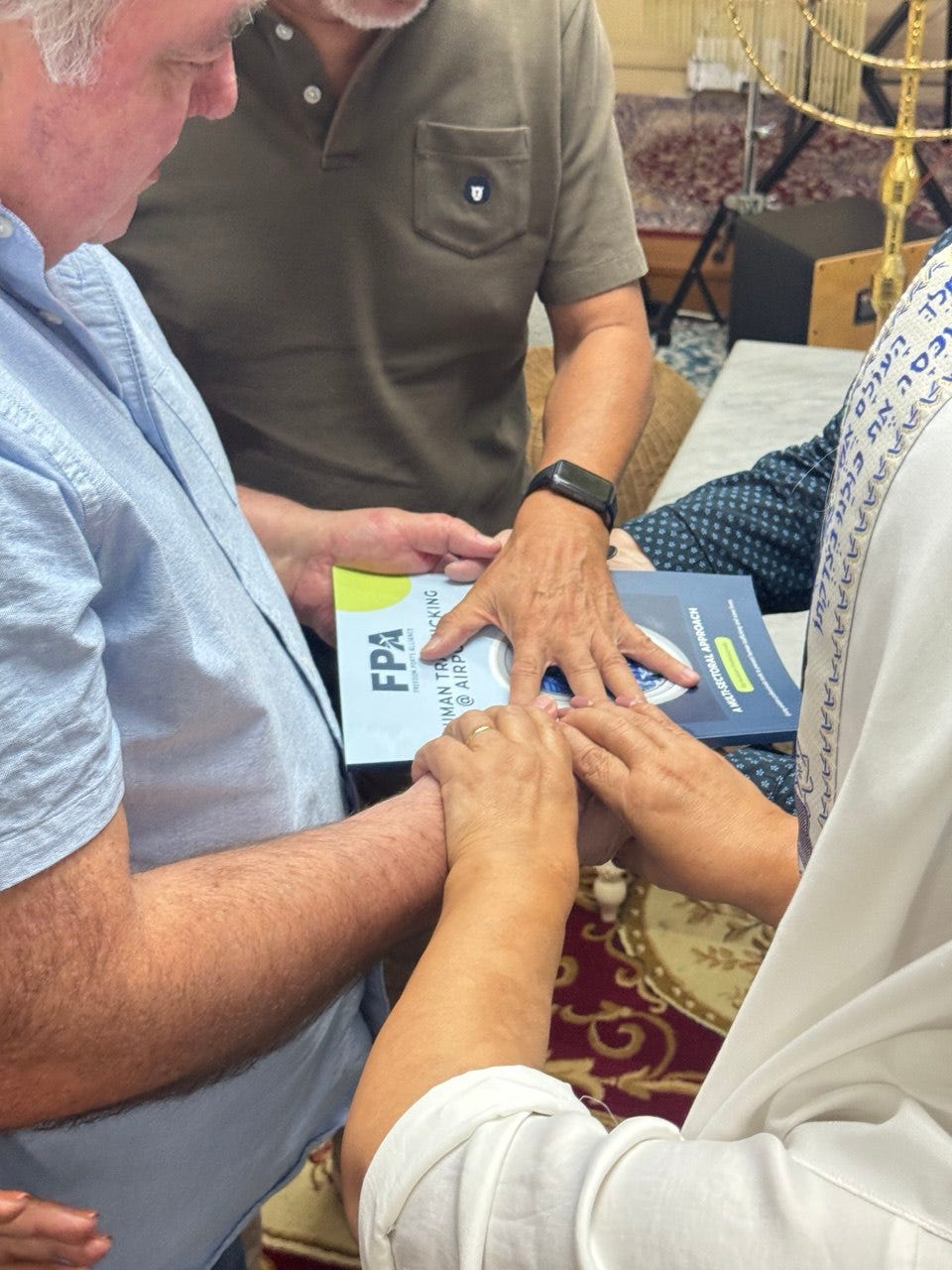
Why Geylang matters
Rev Anita does not treat Geylang as metaphor. She calls it what it is: a classroom.
A place where:
migrant workers sleep between shifts
faith communities quietly provide refuge
systems fail without headlines
hope must be practiced practically
This is where theology moves from abstraction to embodiment. And it is why narrative theology matters: trafficked and displaced persons carry truths that often never make it into policy discourse. Story becomes a form of evidence, and listening becomes a governance discipline.
Four original contributions (in plain terms)
Rev Anita’s thesis contributes four clear, actionable insights:
A faith-anchored governance model
Using the 7 Kingdom Modalities / 7 Mountains of Influence as a practical framework for multi-sector collaboration in reform.
A border-sensitive theology of duty of care
Positioning faith communities as legitimate partners in ethical governance without undermining state sovereignty.
An aviation-centred intervention lens
Treating airports and airlines as decisive intervention points in trafficking supply chains, not neutral transit spaces.
A trauma-informed, culturally embedded reform blueprint
Addressing not only workers, but families, communities, and intergenerational impact.
From Joseph to the jet bridge
One of the thesis’ most striking moves is its insistence that biblical narratives are policy-relevant.
Joseph was trafficked, exploited, criminalised, and yet entrusted with governance. For Rev Anita, Joseph models:
integrity under injustice
excellence without power
forgiveness without denial
This becomes a template: ethical migration governance requires character-driven leadership, systems resilient to corruption, and accountability that restores rather than discards.

Airports are moral thresholds
Trafficking thrives because it is profitable, fast, and exploits trust in safety systems.
That makes airports not peripheral but central: moral thresholds where identification, intervention, and protection can happen early enough to prevent re-trafficking.
Rev Anita argues that:
proactive training reduces INAD costs
early identification prevents re-trafficking
shared accountability lowers business risk
faith-informed ethics strengthens operational resilience
In this light, Freedom Ports Alliance is not framed as activism alone, but as evidence-based applied theology.
“Is this theology or activism?”
Rev Anita’s answer is crisp:
This is theology in obedience.
Biblical tradition does not separate:
worship from justice
faith from governance
prayer from policy
This work does not replace the state’s mandate. It strengthens it. It confronts exploitation without spiritualising it. It seeks covenantal partnership, not control.
The question that remains
“Faith in Action” ultimately turns toward the reader:
Not merely, “What should governments do?”
But, “How can I represent Christ with excellence so that overseas workers are safe, treated with dignity, and not forgotten?”
Because faith, when truly alive, always moves from belief to action.

What this means for donors and partners
A church-embedded scholarship that produces usable outcomes: Your support funds research that becomes practical governance tools, training modules, and institutional design that churches can actually implement.
Protecting people and strengthening trust: This work helps faith communities build processes aligned with natural justice, accountability, and pastoral ethics, reducing preventable harm and increasing credibility in public life.
Formation, not just information: Donors are not financing “more papers,” but an integrated pipeline that forms leaders who can teach, manage, and shepherd with competence and spiritual weight.
Mission capacity for Asia: Strong, just administration is mission infrastructure. It stabilizes ministries, improves stewardship, and makes long-term expansion and partnership across Asia feasible.
A theologically faithful answer to modern complexity: This project keeps the theological spine intact while engaging law, governance, and public administration, demonstrating that Christian leadership can be both deeply biblical and institutionally mature.
* My thesis argues that the local church’s crisis today is not a lack of doctrine, but a loss of integrated formation where theology, governance, and mission belong together. I am developing a framework for a Doctor of Theology in Public Administration that brings administrative law and natural justice into conversation with a biblical theology of authority, accountability, and pastoral care.
The goal is to heal the bifurcation between academic theology and local-church vocation by showing how good governance is not a secular add-on, but a discipleship practice that protects people, strengthens trust, and enables mission.
Using narrative case studies of public administrators alongside ecclesial realities, I aim to produce a model that is both intellectually rigorous and operationally usable: a way for churches and training institutions to form leaders who can preach faithfully, administer justly, and shepherd responsibly, so that the whole person is served and the whole of Asia can be reached with credible, coherent witness.


